
Directional Drilling
Horizontal Directional Drilling (HDD) is a trenchless method used to install underground pipes, cables, and ducts. It's commonly used for fibre optic network installations, particularly in urban or environmentally sensitive areas where traditional trenching would be too disruptive or costly.
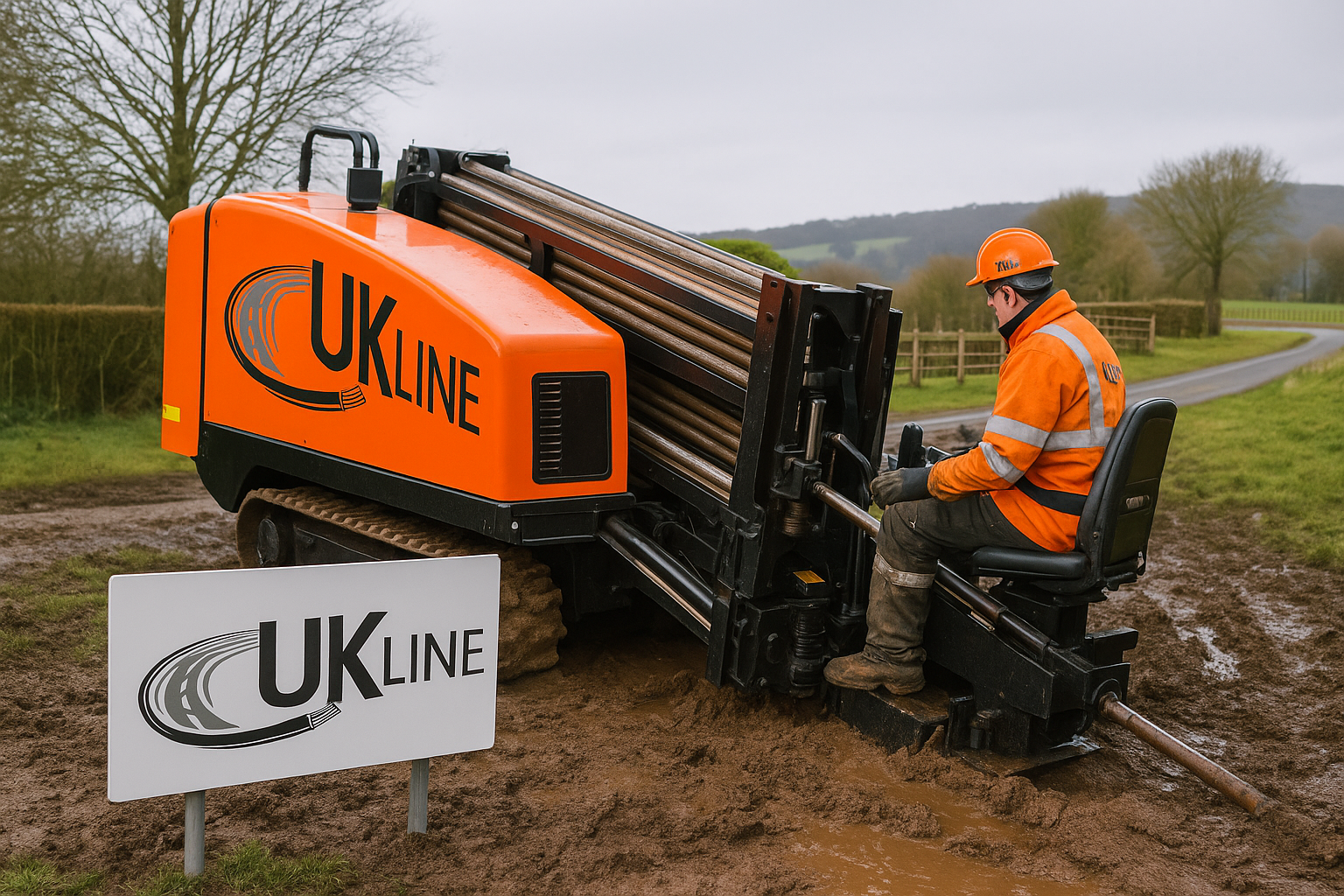
How HDD Works
Step 1Pilot Hole Drilling
The process begins by drilling a small pilot hole from the entry point to the exit point, which can be under roads, rivers, railways, or buildings. The bore is guided precisely along a predetermined path using real-time locating equipment, ensuring the drill follows the right route.Step 2Reaming
After the pilot hole is created, it is reamed (enlarged) to a larger diameter, making it suitable for the installation of the necessary utilities, such as ducts or cables. Reaming may be done in several stages to achieve the final size.Step 3Pullback
Once the hole is properly sized, the cable or duct (often in a protective casing) is attached to the drilling rig and pulled back through the borehole to the starting point. This is called the pullback process. The fibre optic cables are then installed through the ducts, ensuring protection from environmental factors.Step 4Restoration
Since HDD minimises surface disruption, there is usually little to no need for significant restoration, making this method more eco-friendly and cost-effective.
Advantages of HDD for all civil projects
Minimal Disruption: HDD avoids the need to dig large trenches, meaning that roads, pavements, and existing infrastructure are largely untouched. This is especially important in urban environments or areas with existing utilities.
Reduced Surface Damage: Unlike traditional trenching, where roads and pavements must be dug up, HDD minimizes the damage to surfaces, which reduces the need for extensive restoration.
Speed: The trenchless nature of HDD typically allows for quicker installation, especially when dealing with large or complex networks.
Cost-Effective: Despite the high initial setup cost, HDD can be more affordable in the long run, especially for urban or built-up areas, where traditional trenching would require multiple road closures, permits, and long restoration times.